Palazzo Croce Bianca: history and hospitality in central Foligno
Some places tell the story of a town before you even step outside. Palazzo Croce Bianca, in Foligno’s historic centre, is one of them: a building with fifteenth-century roots, where memories of the past meet a warm welcome today.
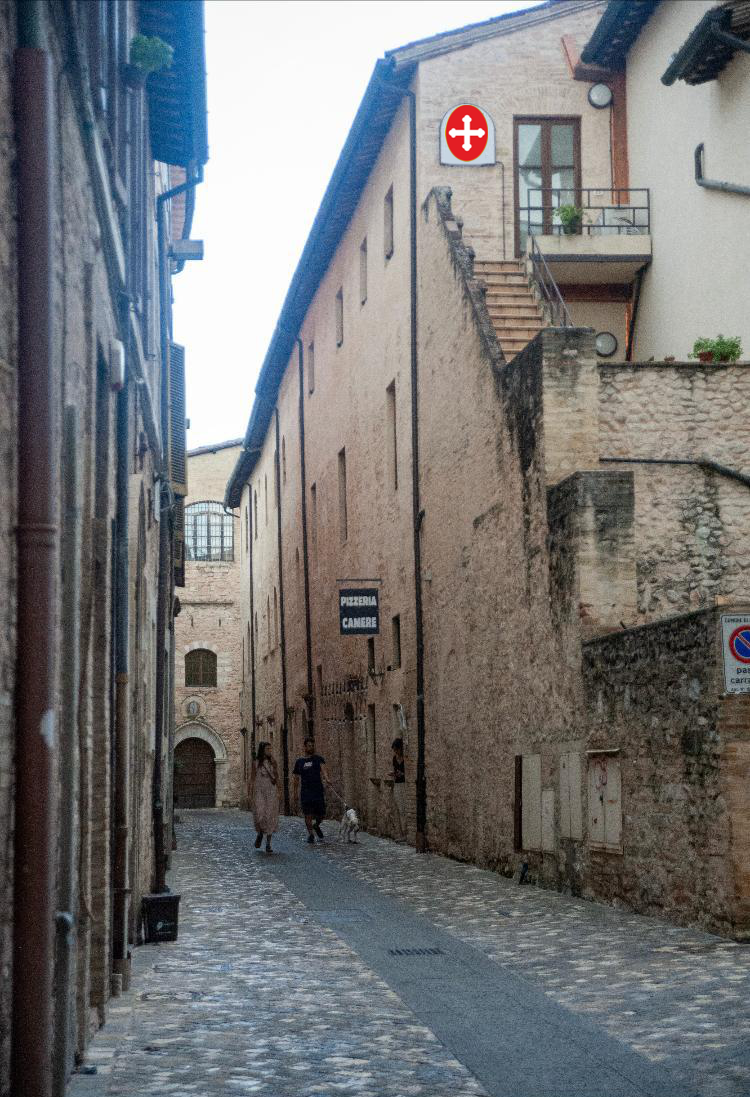
With exposed wooden beams, decorative details and rooms full of historic character, the palazzo is home to Camere Croce Bianca guest house and Pizzeria La Gioiosa. Both businesses are in Via Niccolò Alunno, in Foligno’s historic centre, Umbria, Italy. Contact us before arrival to confirm the entrance for your booking.
Staying or dining here means discovering a corner of Foligno shaped by its artistic and religious history, close to the monastery of Sant’Anna and the legacy of Niccolò di Liberatore, known as l’Alunno.
Fifteenth-century origins and the home and workshop of Niccolò Alunno
The story of this place is woven into the fifteenth-century houses beside the monastery of Sant’Anna, also known as the Monastero delle Contesse. Historical sources place Niccolò Alunno’s home and workshop here, later incorporated into the monastic complex.
The Municipality of Foligno describes accommodation linked to the monastery and created from the homes of fifteenth-century painters, including Niccolò di Liberatore. Architectural and decorative features preserve traces of the different periods through which these buildings have lived.
These origins invite you to see the palazzo as a place transformed over time: first a setting for home life and artistic work, then part of the monastery’s story, and finally a place of hospitality.
Niccolò di Liberatore, the painter who gave the street its name
Niccolò di Liberatore, known as l’Alunno, was a leading figure in Umbrian painting during the second half of the fifteenth century. Born in Foligno, he maintained a close connection with the town, contributing paintings, polyptychs and religious decorations to its artistic heritage.
Alunno’s house preserves glimpses of everyday life in the Renaissance: drawings, graffiti, notes and figures have been identified on its walls. These include profiles accompanied by the names Niccolò and Caterina, interpreted as possible portraits of the painter and his wife.
The connection with the monastery of Sant’Anna
The monastery of Sant’Anna was already active in 1388. Its presence shaped the history of this neighbourhood as the old houses nearby were gradually incorporated into the complex.
According to a local historical account, the houses are believed to have been donated to the monastery by Lattanzio, Niccolò Alunno’s son. The transfer is therefore associated with the generation after the painter.
The site brings together two strands of Foligno’s past: artists’ workshops and religious life. Today, that heritage offers guests a way to understand the palazzo and its surrounding streets.
The interiors today: exposed beams and details to discover
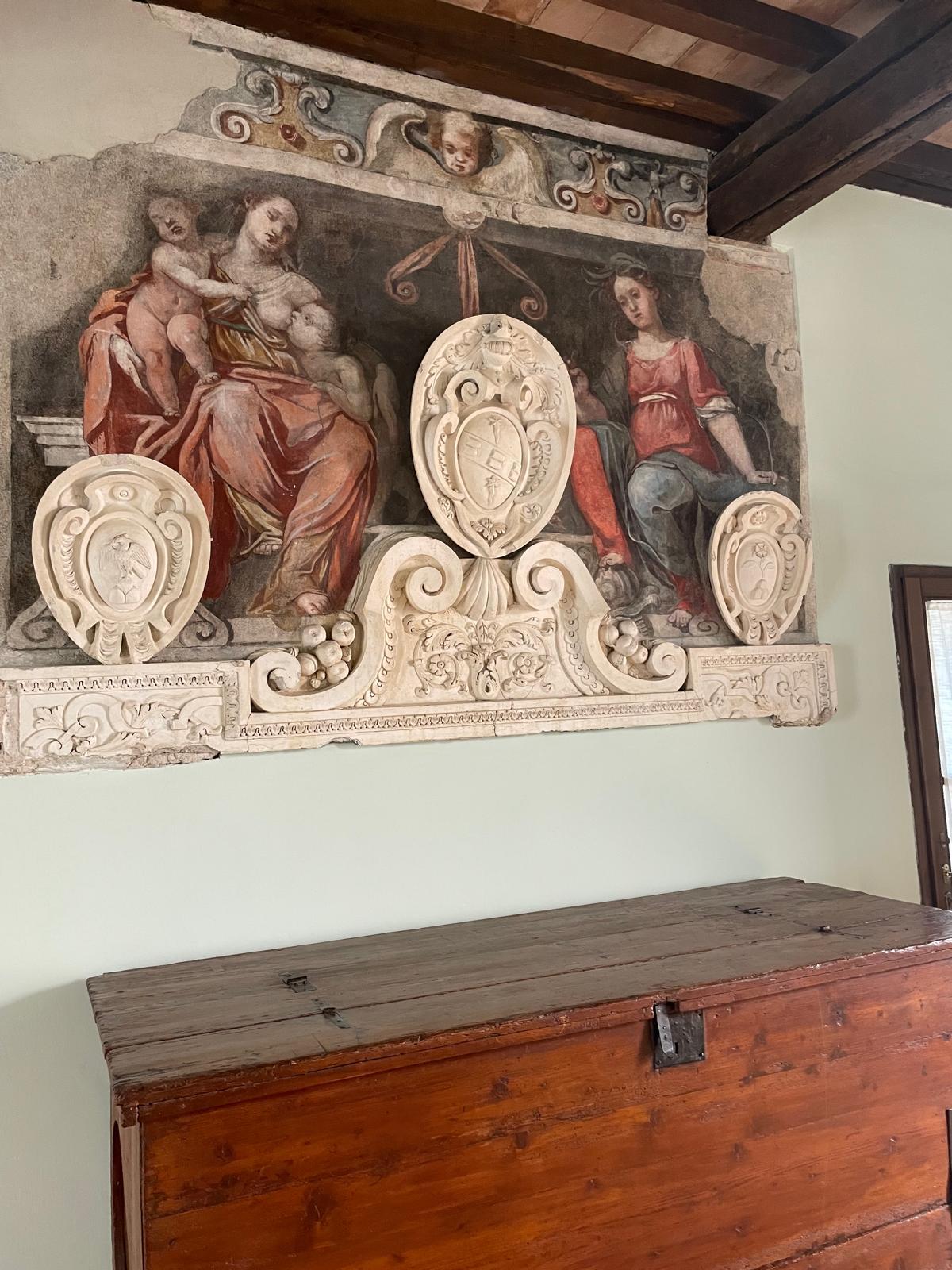
Palazzo Croce Bianca’s character lies in its details. Exposed wooden beams, decorative features and furnishings sit alongside the historic structure, creating spaces that invite you to pause.
The photographs reveal a variety of interiors, where a homely atmosphere meets the building’s artistic heritage. Shared spaces offer somewhere to relax, meet and enjoy your stay beyond your own room.
The building now includes an internal lift and a small terrace reserved for smokers. If you have specific accessibility requirements, please ask about the rooms and access routes before your stay.
Camere Croce Bianca: six rooms in the historic centre
With its entrance at Via Niccolò Alunno 31, Camere Croce Bianca offers six guest rooms within the palazzo.
It is a convenient choice for staying in Foligno’s historic centre and exploring on foot. The railway station is nearby, while the squares, shopping streets and local venues let you experience the town throughout the day.
Every stay is also an opportunity to notice the place around you: a beam, a painted detail or a shared room can reveal something of the palazzo’s long history.
Pizzeria La Gioiosa: good company in the same building
At 29 Via Niccolò Alunno, Pizzeria La Gioiosa completes the experience with pizzas and burgers.
The historic interiors provide a setting for dinner together, an evening with friends or a relaxed meal after a day in Foligno. The pizzeria welcomes both overnight guests and visitors coming simply to dine.
The rooms and pizzeria share the building, with separate entrances: a convenient way to combine accommodation and dining in one place.
A starting point for discovering Foligno and Umbria
Palazzo Croce Bianca introduces you to Foligno through its streets and history. Set out on foot to explore the centre, admire churches and façades, reach the squares and discover local life.
For longer stays, Foligno also makes a base for day trips to Umbria’s towns and villages, combining cultural visits with time to relax.